
A Care Package
Made with Heart
Glimmer Boxes are care packages designed for young women ages 14–26 navigating disability or chronic illness. Each box includes two pieces of adaptive clothing with magnetic closures and discreet openings for medical equipment, a magazine created by and for young women with disabilities, and a nervous system regulation tool to help her find joy in small moments.
Her medical care is covered.
This part often isn’t.
When you’re treating a young woman with a disability or chronic illness, you’re focused on her medical management. But her day-to-day reality also includes experiences that don’t show up in a chart. Those experiences affect how she sees herself, how connected she feels to her peers, and what she believes is possible for her life.
Order for Your Patients →“I can’t find a shirt that works with my feeding tube that doesn’t look like it came from a medical supply catalog.”
Getting dressed is one of the most independence-linked daily tasks we have. When adaptive options look clinical, they send a message she doesn’t deserve to hear.
“I’m scrolling through Instagram seeing girls in outfits I could never physically wear.”
Representation matters at every age, but especially when identity is still forming.
“I’ve never seen someone who looks like me in a fashion magazine.”
Seeing yourself reflected and celebrated changes what you believe is possible for your own life.
Medicine treats the diagnosis. We address what comes alongside it.
Order Glimmer Boxes →Intentional Down to the Box Itself
Every detail is designed with her in mind, starting with the box. It opens with a magnetic closure and a large fabric loop so she can access it independently, no matter her mobility. What’s inside is just as considered.
Two Pieces of Adaptive Clothing
Designed to look like what any young woman her age would wear, not medical apparel. Each piece has magnetic closures she can manage herself, discreet openings for feeding tubes, central lines, insulin pumps, and ostomy bags, and fits cut for sitting, not just standing. Sensory-friendly fabrics that won’t irritate her skin.
A QR tag on every piece reads out the care instructions, describes the color, and tells her exactly what the item looks like. Designed for young women who are blind or have low vision.
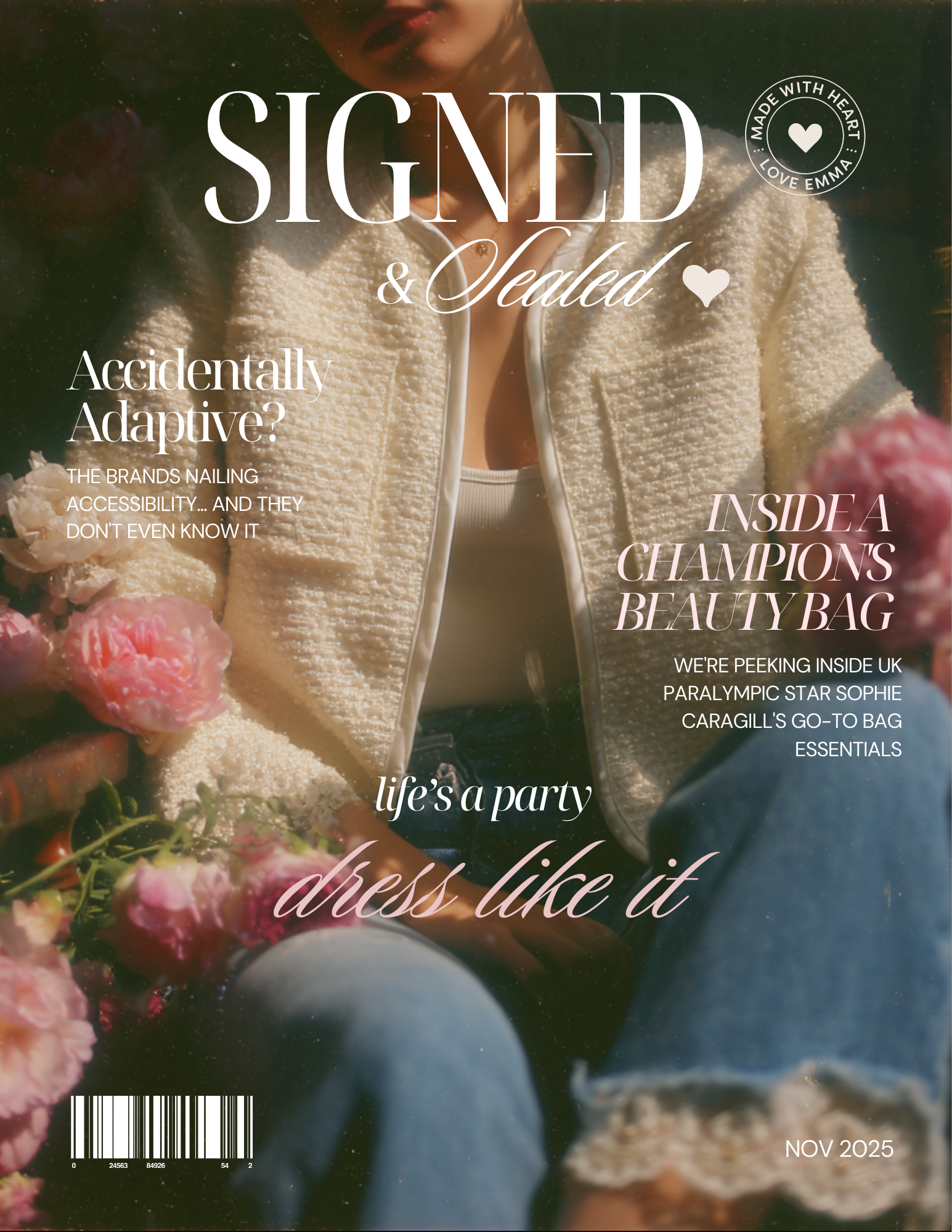
Signed & Sealed Magazine
Beauty, fashion, and lifestyle content created by young women with disabilities and chronic illnesses, for young women with disabilities and chronic illnesses.
Real representation in a physical format. A screen-free option during hospital stays. Stories from peers who know exactly what she’s going through.

Crystal Glimmer Catcher & Letter
A hanging crystal that catches light and fills the room with reflections. It comes with a letter introducing glimmers, which are small moments that signal safety to the nervous system.
Based on Deb Dana’s polyvagal theory work. A beautiful regulation tool she can keep using long after discharge.
She Shouldn’t Have to Choose Between Her Clothing and Her Equipment
Every piece of clothing in a Glimmer Box is designed with discreet access openings so she can wear real fashion without working around her medical equipment. The openings are positioned and finished so they’re invisible from the outside. It just looks like a great outfit.
Discreet openings positioned at the abdomen, designed to sit flush when not in use.
Chest openings that allow access without removing the garment.
Openings sized and positioned for pumps and continuous glucose monitors worn on the arm or abdomen.
Waistband openings and extended lengths that accommodate ostomy bags discreetly.
Clothing That Works the Way She Does
Co-designed with Tracy Vollbrecht (nationally recognized adaptive fashion consultant) and occupational therapists. Built for a wide range of functional needs using universal design principles.
Designed for young women withNo buttons, no zippers. Opens with one hand, supporting independence for young women with limited dexterity or mobility.
Hidden openings positioned for feeding tubes, central lines, insulin pumps, and ostomy bags. Designed to be invisible from the outside so the clothing looks like clothing, not medical apparel.
Proportioned for a comfortable, flattering fit however she moves through her day.
Soft, low-irritation materials. No scratchy seams or tags.
Scan to hear the care instructions, a color description, and exactly what the piece looks like. Designed for young women who are blind or have low vision.
How Your Team Can Use Glimmer Boxes
Every department that works with young women navigating disability or chronic illness has a use for this. Here’s how providers are putting them to work.
Use the magazine as screen-free, disability-representative content during extended stays. Incorporate the adaptive clothing in ADL work and discharge planning. Introduce glimmers as a regulation technique she can take home.
Use the clothing during dressing assessments and skill-building. Assess her ability to manage magnetic closures and medical access features. Teach compensatory strategies with clothing she gets to keep, and reference when recommending adaptive features for her personal wardrobe.
Child life specialists can incorporate boxes during psychosocial assessments or identity and adjustment work. Social workers can include boxes in discharge planning to address practical and psychosocial needs at the same time.
Provide boxes to young women moving from pediatric to adult healthcare. Age-appropriate content helps bridge a transition period when developmentally relevant resources are often scarce.
Research consistently shows that youth with chronic illness and disability face significantly higher rates of mental health challenges and social isolation than their peers. Studies also show that psychosocial support is linked to improved wellbeing and health outcomes, and that support doesn’t have to look like therapy. Independence in daily tasks like getting dressed, seeing yourself represented in media, and having tools for emotional regulation are all connected to stronger self-concept, peer connection, and resilience. That’s exactly what a Glimmer Box is built around.
Ready to Order Glimmer Boxes for Your Patients?
We partner with hospitals, rehabilitation centers, and healthcare organizations. Reach out and we’ll get back to you with pricing and implementation details for your department.
- Volume pricing for orders of 10+ boxes
- Compatible with grant funding, departmental budgets, and patient support programs
- We’ll walk you through implementation for your specific department